


Migrate Systems Without Stopping Business — NETIZEN and SNP Host Executive Roundtable to Address SAP Extended Maintenance 2028–2030
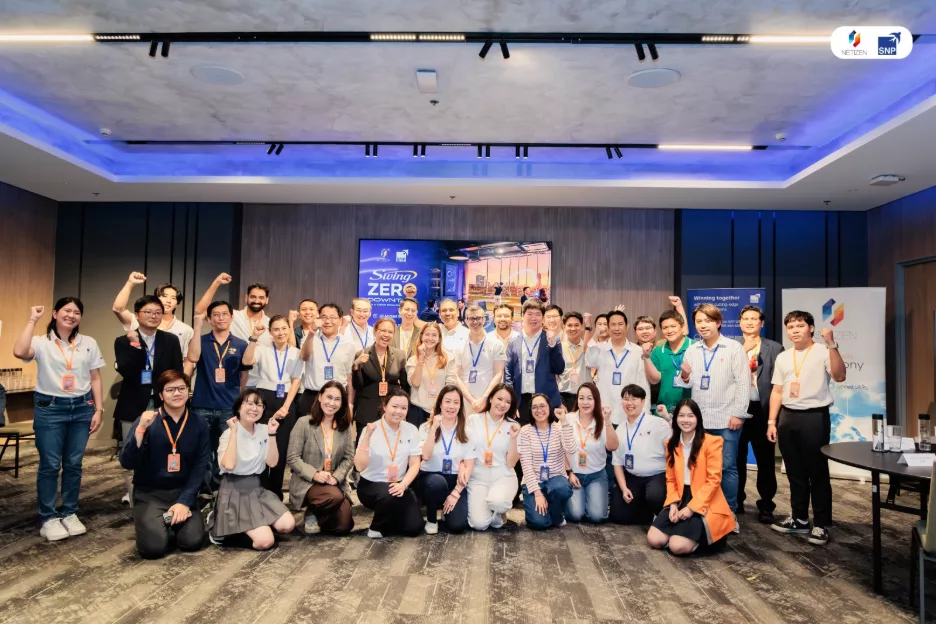
Bangkok, August 28, 2026 — Netizen Co., Ltd. (NETIZEN), a leading SAP consulting and implementation service provider in Thailand, in collaboration with SNP, an SAP Data Transformation expert from Germany, hosted the “Swing Zero Downtime : Move to SAP S/4HANA without Stopping Business” event at Topgolf Thailand. The event gathered over 30 senior executives, including CFOs, CIOs, and IT Directors, from leading organizations in the automotive, food and beverage, and chemical industries.
This event was organized to address a common challenge currently faced by SAP user organizations nationwide: the Extended Maintenance period for SAP Business Suite 7, running from 2028 to 2030. This marks the final window where organizations continue to receive comparable levels of support and serves as the baseline timeframe for backward planning.
The event was designed as an executive roundtable rather than a large-scale seminar, ensuring focused and practical exchanges. Speakers from both companies shared insights ranging from strategic levels down to live tool demonstrations.
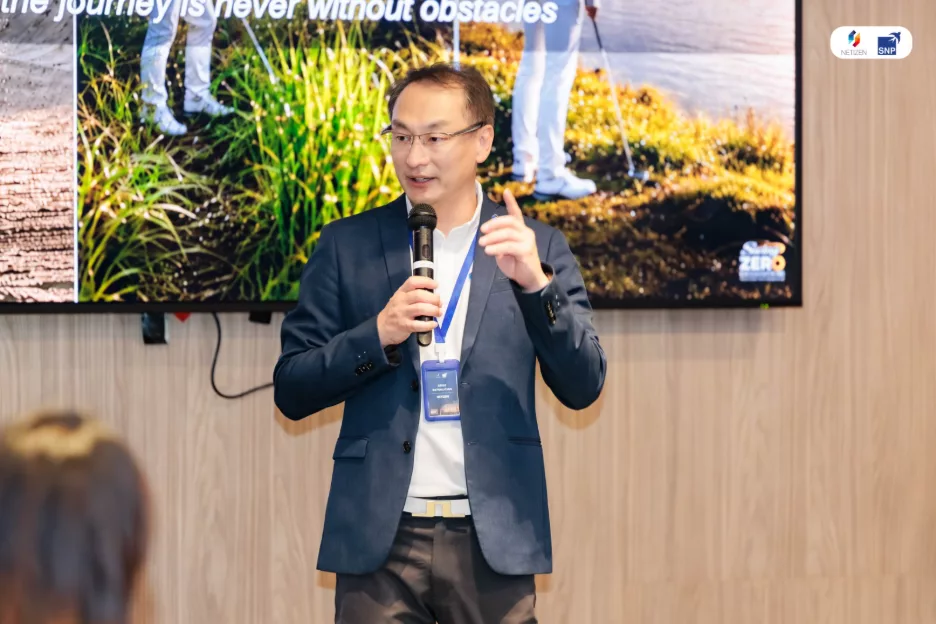
Mr. Seree Satukijchai, Chief Executive Officer of Netizen, opened the event by linking system migration to the agenda currently garnering the most interest among executives: the practical application of AI in business.
“The most important thing for AI is data. If we feed bad data in today, the output will also be bad. The question is how we analyze which data is relevant to our business and the organization's future. The key is to distinguish between Active Data, Inactive Data, and truly critical data.”
This perspective framed the day's discussion, shifting the focus from the common organizational concern of “how to migrate systems” to a deeper question: “do we understand our data well enough?” Because an ERP transformation project is one of the rare opportunities in a decade for an organization to properly organize its data.
Furthermore, Mr. Seree outlined the role that Netizen aims to have for its clients.
“The most important thing for AI is data. If we feed bad data in today, the output will also be bad. The question is how we analyze which data is relevant to our business and the organization's future. The key is to distinguish between Active Data, Inactive Data, and truly critical data.”
Mr. Seree Satukijchai — Chief Executive Officer, Netizen Co., Ltd.
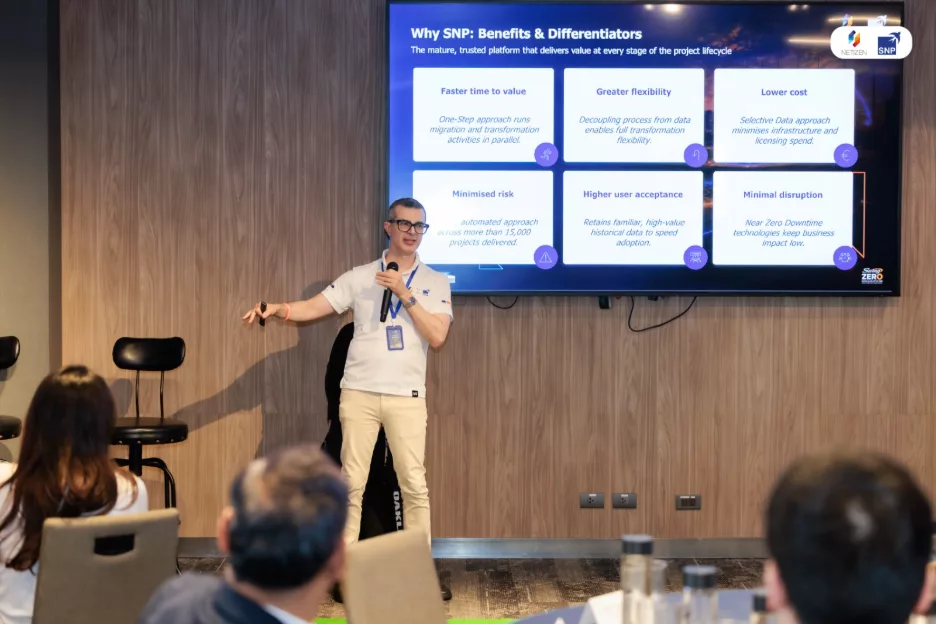
Following that, Mr. Phillip Miltiades, President and Managing Director – Asia Pacific from SNP, delivered a presentation on “AI-Powered SAP Transformations,” illustrating global technology trends and business priorities shaping transformations worldwide. He highlighted how leading organizations view this transition as an opportunity to build competitive advantage while minimizing risk.
The point Phillip emphasized most strongly was not about any specific technology, but rather about keeping an open mind toward available alternatives.
“Something you may have once thought was a system limitation—we want everyone to keep an open mind today because there is so much more technology in the world. If we stay informed about all options, we can choose the best path for our organization.”
Phillip Miltiades, President and Managing Director, SNP Asia Pacific
This message became the core theme for the remainder of the event, serving as a bridge to the next session where both Netizen and SNP jointly demonstrated that true alternatives are far more numerous than most organizations realize.
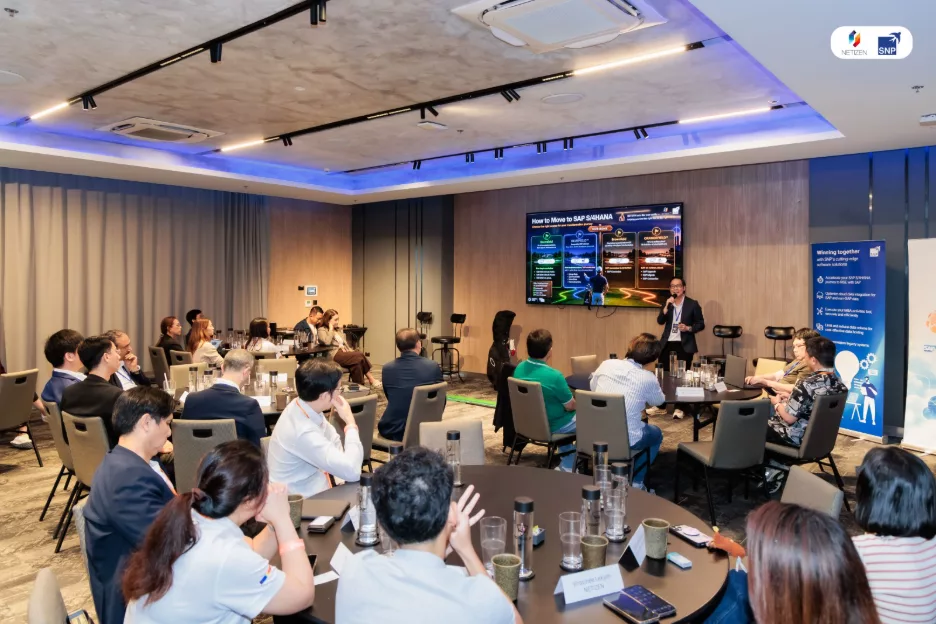
Mr. Kitti Harnwanich, Technical Practitioner Manager from Netizen, opened this content session by establishing a shared timeline for executives, as the phrase “still supported” carries vastly different meanings across different periods.
The Three Clocks of SAP Maintenance
- Mainstream Maintenance — Full support scope covering legal changes, support package delivery, problem resolution, mission-critical support, and Service Level Agreements.
- Extended Maintenance (Optional) — Scope similar to Mainstream but with some technical limitations. Available for SAP Business Suite 7 and related add-on products between 2028 and 2030, with an additional fee of 2% of the maintenance base.
- Customer-Specific Maintenance — A period many organizations mistakenly believe is still safe, but in practice means no delivery of legal changes or new support packages, no guarantees for technology updates (e.g., no new kernel versions for new databases or operating systems), no support for new interfaces, resolution limited to previously encountered issues with potential extra costs for new issues, and no Service Level Agreements.
For Thai organizations that must periodically adapt to government tax and regulatory changes, the limitation of not receiving legal updates represents a direct compliance risk, not merely an IT risk.
Therefore, the baseline timeframe executives should use is 2028–2030, which marks both the point when maintenance costs begin to rise and the final line before entering a period of significantly restricted support.
Counting back from 2030 and deducting the transition project duration—which typically takes several quarters—along with the readiness assessment, budgeting, and internal approval phases, it becomes clear that the window of time for making a "decision" is shorter than the year 2030 might suggest.
The destination is more secure than you think
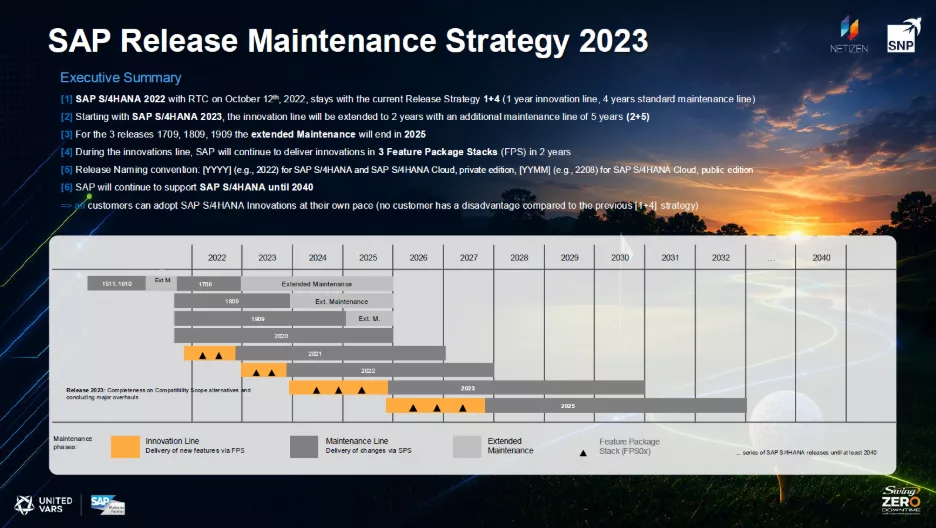
Conversely, Mr. Kitti pointed out that the destination is highly certain, as SAP has announced continuous support for SAP S/4HANA through 2040. Starting with SAP S/4HANA 2023, the release strategy has shifted to a 2+5 model—extending the Innovation Line to 2 years, coupled with a 5-year Maintenance Line, replacing the previous 1+4 model.
The practical outcome is that organizations can choose the timing of innovation adoption based on their own readiness, without being at a disadvantage compared to the previous strategy. During the Innovation Line, they also receive continuous Feature Package Stacks within a 2-year timeframe.
The turning point since 2021
Another point raised is that in the past, organizations had two main choices: starting completely from scratch or converting legacy systems. However, since 2021, a third option—Selective Data Transition—has filled the middle ground and become the answer for projects that do not fit standard frameworks.
SNP: The powerhouse behind Selective Migration projects worldwide
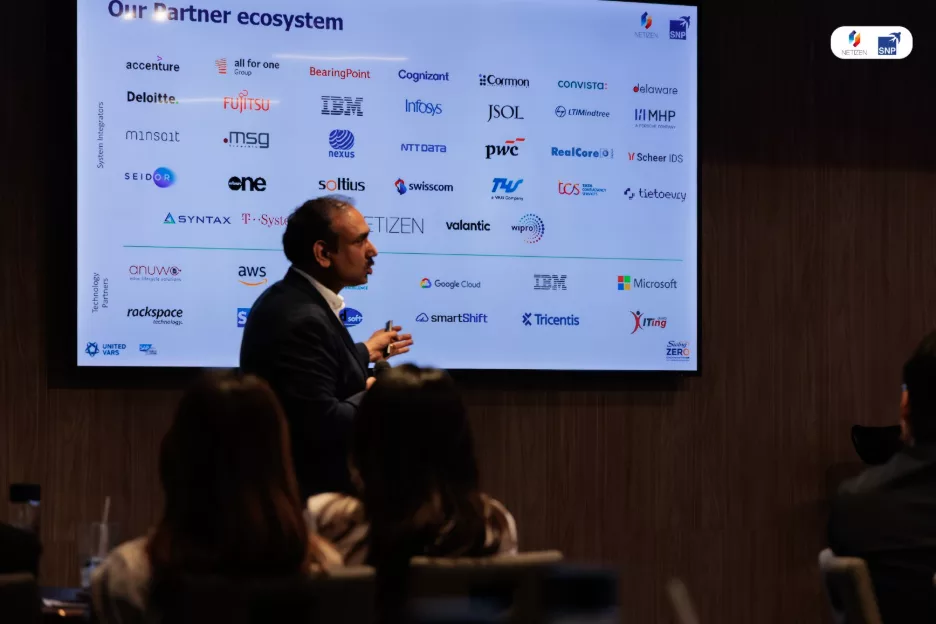
Mr. Kuldeep Solanki, Managing Director – SEA at SNP, began by introducing SNP—a company that many organizations in Thailand may not yet be familiar with, yet is the force behind many of the world's most complex SAP migration projects.
- Global market leader in Selective SAP Data Migration, headquartered in Heidelberg, Germany, with 35 offices across 20 countries covering 5 regions.
- SAP Gold Partner and founding member of the SAP S/4HANA Selective Data Transition Engagement Community.
- Over 30 years of experience, successfully delivering more than 15,000 projects with a team of over 1,500 professionals.
- According to data presented by SNP, the company holds approximately 77% of the global market share for Selective SAP S/4HANA Transformation projects.
- Inventor of the Bluefield® approach, which combines the strengths of traditional migration methods for maximum flexibility, efficiency, and security.
Regarding its relationship with SAP, beyond its Gold Partner status, SNP has continuously expanded its collaboration with SAP, with Mr. Peter Maier serving on SNP's Supervisory Board as well.
The list of organizations choosing SNP's technology spans multiple industries, including Airbus, Audi, Volkswagen, Siemens, thyssenkrupp, ABB, Festo, Heineken, Kellogg's, Cargill, L'Oréal, Merck, Microsoft, Saint-Gobain, E.ON, Evonik, TE Connectivity, Coop, and Generali.
Examples of delivered project scales include migrating systems over 60 TB to SAP S/4HANA with near-zero downtime, projects involving the transfer of over 1.3 billion data records, and the migration of 107 company codes in total.
Not two choices, but a five-level spectrum
Furthermore, Kuldeep expanded on the picture, showing that transition options are not limited to just two extremes, but rather form a spectrum ranging from Pure Greenfield to Pure Brownfield, with three options working alongside SNP in the middle: Greenfield with SNP, Selective with SNP, and Brownfield with SNP.
The underlying principle is to retain only necessary data to minimize business disruption and drive innovation in a single step, using a software platform to reduce manual errors.
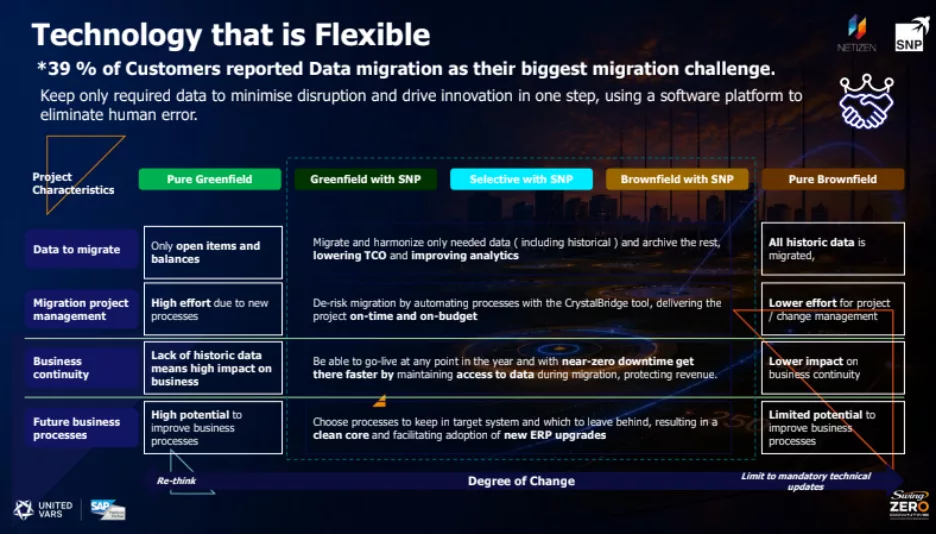
Data presented on stage indicated that approximately 39% of customers view data migration as the biggest challenge of a project, which explains why choosing the right position on this spectrum is more important than choosing any single technology.
Bluefield®: Decoupling data migration from system modernization
The core concept behind Bluefield® is decoupling—separating two tasks that are typically bundled together. On one side are System Configuration and Custom Code, which are modernized; on the other side are Master Data and Transactional Data, which are migrated separately.
Both parts are then brought back together, or recoupling, where the destination system is newly configured and codes are appropriately adjusted, while data is adapted to fit the new structure, including historical data. The result is a cleaner system for the organization without sacrificing transactional history.
Kyano®: From discovery to decommissioning
During the event, Kuldeep also presented an overview of Kyano®, a portfolio categorized by the lifecycle stages of enterprise data.
- Kyano® Foundation — Gives organizations an up-to-date overview of their data landscape, featuring Agility Analysis and SAP Housekeeping
- Kyano® Move — Data migration, connection, improvement, and optimization, covering SAP Platform Modernization, Platform Agnostic Modernization, Agile Organizational Transformation, Mergers & Acquisitions, Cloud Move, and Cloud Data Integration
- Kyano® Manage — Data monitoring, auditing, testing, archiving, and retirement, covering Test Management, Data Verification, SAP Active Archiving, Application Lifecycle Management, Application Retirement, and Enhanced Analysis
All three components are aligned with every phase of the RISE framework, from Discover, Prepare, Explore, Realize, Deploy, to Run
4 Sample Scenarios for Organizational Transformation
The heart of Kyano® Move is the Kyano® — The Data Transformation Platform, designed to handle all four major categories of organizational change, far beyond just migrating to SAP S/4HANA
Most importantly, it enables multiple projects to run simultaneously in a single step with near-zero downtime during cutover
What sets these four groups apart is not their complexity, but “the destination of the data”—where the data will ultimately travel
Group 1 — SAP S/4-Transition : Migrating to the SAP S/4 Destination
This group involves moving data from legacy systems to the SAP S/4HANA destination
It covers Bluefield® Migration, Greenfield Migration, the Migration Factory model for multi-entity organizations, and System Consolidation for merging multiple systems, all executed with a near-zero-downtime approach
Group 2 — SPLIT : Separating Existing Systems
When an organization needs to carve out a specific part of an existing system, the data destination involves splitting it from the active system
This group covers Legal Entity Carve-outs, selective splitting by Plant, Profit Center, or custom criteria, Archive Split, support for Share Deals and Asset Deals, as well as decommissioning unused Company Codes
This is a common scenario in organizations undergoing mergers, acquisitions, or divestitures
Group 3 — MOVE : Relocating Entire Clients
This group involves moving entire clients to a new environment while keeping the structure intact
It covers Move to Cloud, version upgrades, database or operating system changes, migration to HANA, and client-to-client migration between systems, all with near-zero-downtime support
Group 4 — HARMONIZE : Restructuring Within the Existing System
Unlike the first three groups, data here does not travel elsewhere; instead, its structure is transformed within the active system
It covers tasks such as Chart of Accounts Conversion, New GL Conversion, Profit Center restructuring, Company Code consolidation, Plant relocation, master data standardization, and Controlling Area consolidation
These are typical tasks when an organization restructures its business or changes accounting policies
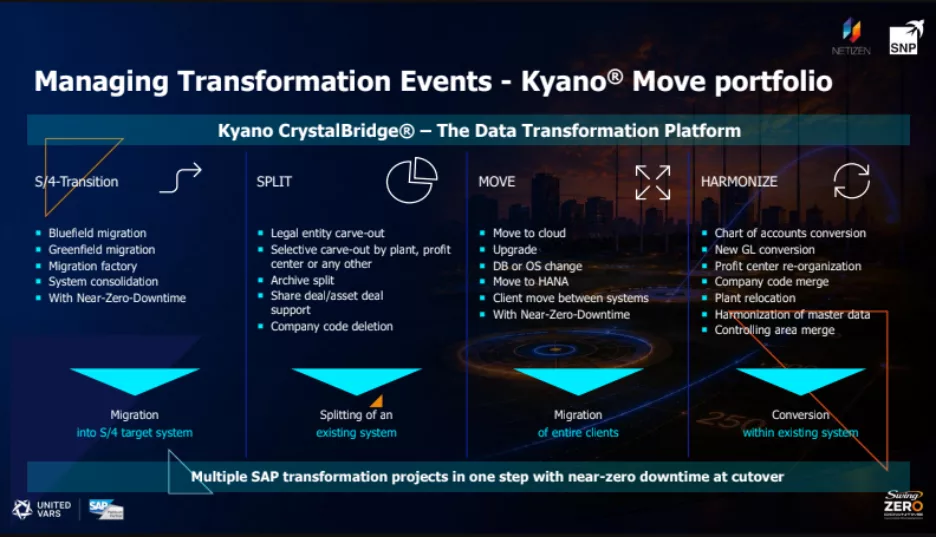
And the core essence of the entire platform is “Multiple SAP Transformation Projects in One Step with Near-Zero Downtime at Cutover”
Executing multiple SAP transformation projects simultaneously in a single step with near-zero downtime during cutover
In practical terms for executives, if your organization needs to accomplish multiple tasks at once—such as migrating to SAP S/4HANA, moving to the cloud, consolidating company codes, and revising the chart of accounts—
you don't need to break them into four separate projects requiring four system outages, saving maximum time, budget, and business impact
Single Step Transformation : From Multiple Systems to a Single System
Furthermore, Kuldeep illustrated the real-world operational picture through a scenario common in large enterprises: having multiple ECC systems and potentially some existing SAP S/4 systems, beginning with Data Strategy & Design, Conflict Analysis, and Global Template definition
This is followed by the Carve & Harmonise phase, which includes data extraction from source systems, business verification, conversion into the SAP S/4HANA structure, selective module separation, master data standardization, business partner conversion and adjustment, and time-based data filtering
The final phase is Merge & Move, where organizations can choose between a phased rollout or a Big Bang approach, aiming to minimize downtime for both source and destination systems while ensuring data validation and test system data masking. The legacy ECC system can also remain accessible from the SAP S/4 side afterward
6 Key Business Value Drivers
What makes Kyano® different from standard data migration tools is its design to deliver value across every phase of the RISE framework, from Discover, Prepare, Explore, Realize, Deploy, to Run
Kyano® Foundation operates during the Discover and Prepare phases, followed by Kyano® Move covering Explore through Realize, and concluded by Kyano® Manage overseeing Deploy through Run
Summarized into the actual value delivered to organizations, SNP categorizes them into 6 dimensions, known as Kyano®‘s 6 Value Drivers
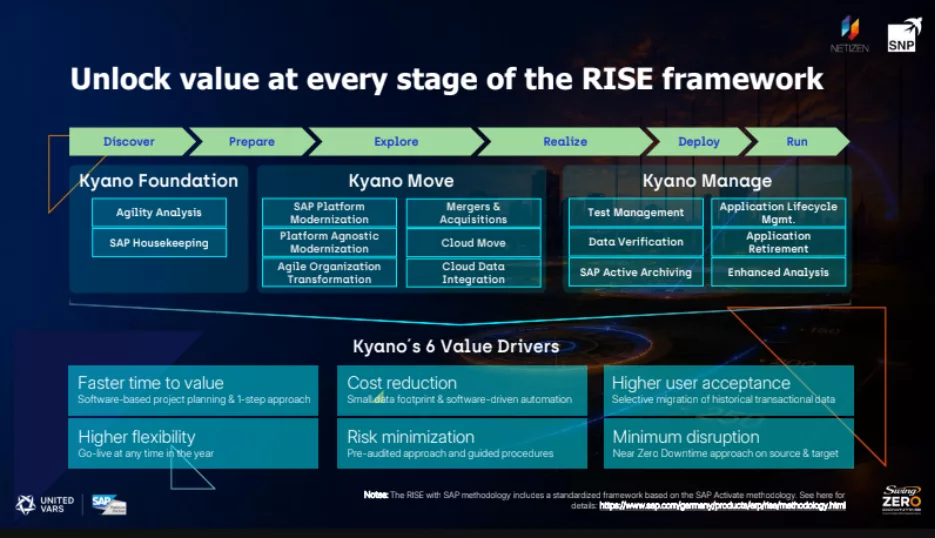
- Faster time to value — Realize business results faster
Because project planning is software-driven and uses a single-step approach rather than dividing the project into multiple sequential phases.
Another factor is the experience embedded within the tool itself.
Because it features a set of sample data migration rules that act as an accelerator, adaptable to specific organizational needs. When these rules are managed by software, the organization's subsequent projects learn and adapt even faster.
- Cost reduction — Lower project costs
Achieved in two ways: first, through a smaller data footprint by migrating only truly essential data.
Second, through software-driven automation, which reduces both manual labor and the time spent on repetitive tasks throughout the project.
- Higher user acceptance — Easier adoption of the new system by users
Because historical transactional data can be selectively migrated based on the organization's specific requirements, such as maintenance history, long-term projects, or active warranty contracts.
Equally important, the migrated data retains the familiar look and feel of the legacy system.
Including inventory movements, confirmations, deliveries, invoices, change logs, price calculations, and original document numbers.
Users can therefore resume work immediately without having to learn a new set of data—a primary reason ERP projects face resistance on the ground.
- Higher flexibility — Greater flexibility in scheduling Go-Live dates
Organizations can Go-Live at any time of the year, unconstrained by month-end or fiscal year-end, and without needing to separate Master Data migration from Transactional Data to meet accounting closing cycles.
In practical terms, project schedules are driven by business readiness rather than technical limitations.
- Risk minimization — Reduced project risk
Through a pre-verified approach accompanied by systematically governed workflows, yielding more predictable outcomes than relying on ad-hoc decision-making.
Furthermore, during testing cycles, data can be easily deleted and reloaded, rapidly improving data quality within a single test cycle rather than waiting to fix issues in subsequent rounds.
- Minimum disruption — Minimal business impact
With a Near-Zero Downtime approach covering both source and target systems, business operations continue seamlessly during the transition.
Technically, this is the result of loading data across the Application Layer, enabling fast execution without dependencies between data sets, allowing massive volumes of data to be loaded in a short window.
Lessons from Global Organizations
Finally, Kuldeep shared examples of projects facing challenges similar to those confronting Thai organizations, such as:
- SPAR Austria — Migrated relevant data from a 28 TB database within 36 hours over a single weekend, followed by 12 hours of business validation, while achieving data transparency to support strategic decision-making.
- Airbus — Consolidated five local ERP systems of Airbus Commercial Aircraft into a single platform under a Central Finance model, transitioning to the New General Ledger and SAP S/4HANA finance in a single step.
- Saint-Gobain — A carve-out project requiring system separation in under four months without disrupting ongoing operations, while securely and compliantly delivering data to the acquiring entity, resulting in an overall migration speedup of approximately 40%.
- Mitsubishi Hitachi Power Systems Europe — Selected and transferred data to a separate SAP system, splitting the Go-Live into two phases without business disruption, allowing the newly established company to commence operations immediately with Go-Live balances fully compliant with auditing standards.
- Haier RRS Logistics — A company code split involving massive data volumes and a broad project scope, yet execution of the cutover was rapid and smooth, taking less time than projected and significantly reducing team workload.
When Legacy Data is Too Massive to Carry Over Entirely: The KONE Case Study
A case study that clearly reflects the challenges of large manufacturers is KONE, which had to manage a 20-year data retention policy extending 5 years into the future. Their legacy ECC system comprised 43 TB compressed (or approximately 123 TB uncompressed), plus an additional 20 TB of archive data and 40 TB of attachments.
The challenges went beyond technology; process-wise, many transactional document statuses remained open and could not be archived. Personnel-wise, users were unaccustomed to working with archived data, limiting the scope and target timeline for retention.
The chosen approach involved four concurrent workflows: beginning with reforming archiving practices on SAP S/4 using Kyano® Outboard along with analyzing open items and long-term planning, followed by migrating only necessary timeframes into SAP S/4HANA using a Bluefield approach, reducing the new system data size to under 7 TB.
The third step was legacy system decommissioning, preserving the entire ECC system—including archives, attachments, and databases—in Kyano® Datafridge for long-term storage, accessible via screens running on SAP S/4HANA. The final step was configuring new archiving sets on SAP S/4HANA via Kyano® Outboard.
Start with Facts, Not Assumptions
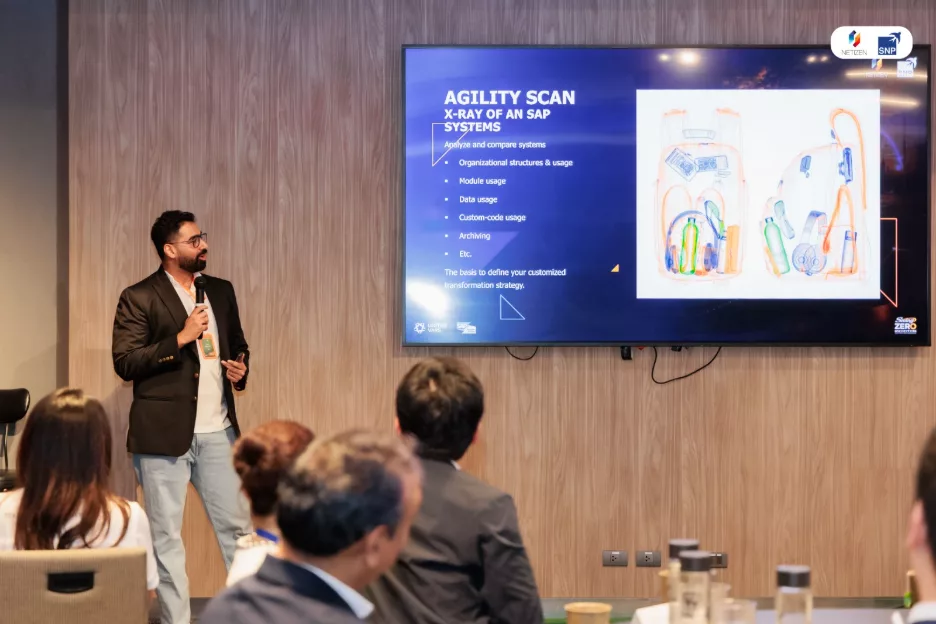
Mr. Muzammil Kazi, Pre-Sales/Senior Solution Lead from SNP, opened the demo session with SNP's working principles, which always begin with Analysis. This means understanding the current state of the SAP Landscape in terms of both format and usage volume, the interrelationships among components, and the potential for data cleansing, ensuring that every decision is based on facts rather than assumptions.
The tool used is Kyano® Agility Agility Analysis in a cloud portal format, featuring out-of-the-box analytical suites, simulation capabilities, and blueprinting tools, focusing on rapid deployment and ease of understanding.
Analysis Extractor: X-Raying the SAP System
Kazi compared the function of the Analysis Extractor to getting an X-ray of the entire SAP system, analyzing and comparing organizational structures, module utilization, key configuration values, custom code usage, simplification items, and data volumes. All of these serve as the foundation for defining an organization's specific transformation strategy.
The practical steps are simpler than many might think. Customers or hosting providers run reports on the SAP system to generate export files, then upload them into the Kyano® Agility Analysis Portal to process them into a suite of analytics, including geographic overviews, SAP S/4 readiness assessments, simplification item lists, and related Fiori Apps.
The Numbers That Changed the Executives' Minds in the Room
One of the most attention-grabbing points was highlighting that the current database size does not equal the volume of work required for migration. The explanatory example used a 10 TB source system, which included master data, open items, historical transactional data, technical data, and logs.
When filtered according to business requirements, the actual agreed-upon migration scope might be reduced to around 4 TB, comprising about 0.3 TB of master data, roughly 0.7 TB of open items and operational data, and another roughly 3 TB of selected historical data. This means approximately 60% of the original footprint does not need to be migrated at all.
Executive Summary: The data migration scope is determined by business choices, not by the total database size. The actual destination size will be confirmed during the assessment and testing cycles.
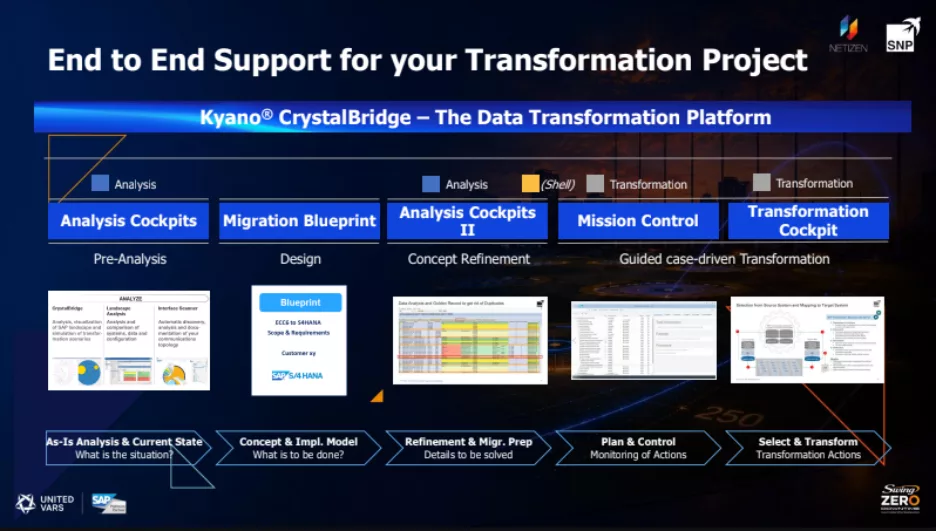
Support Throughout the 5 Project Phases
Kazi also demonstrated that this same platform can operate continuously throughout the project lifecycle, going beyond mere analysis.
When an Organization Has More Than One System
For organizations that need to consolidate multiple systems, Kazi also demonstrated Extended Reporting for Merge, an automated report comparing data from the Analysis Extractor of multiple systems simultaneously. It has three main objectives: identifying conflicts that must be resolved before starting the project, pointing out areas with potential to reduce redundancy of unused components, and providing an integrated perspective on the changes that will occur on SAP S/4HANA.
The report covers system data comparison and mandatory SAP S/4HANA topics, company codes with location mapping and organizational unit conflicts, module usage to see which parts are shared and which differ, the number of custom developments (whether active, unused, or conflicting), as well as an integrated view of relevant simplification items, Fiori apps, business functions, and add-ons.
However, Kazi explicitly stated that this report does not answer how systems should be consolidated, as the choice depends on each organization's unique situation. Rather, it provides a clear picture of similarities, differences, and potential conflicts before making a decision.
Legacy Data: Retain It Without Carrying the Costs
Towards the end, Kazi presented two tools designed for organizations with large amounts of accumulated data:
- Kyano® Datafridge — Cost-effectively decommission legacy applications while maintaining normal access to legacy system data.
- Chemicals (USA) — DOW Chemicals retired over 42 TB of structured data and attachments from SAP R2, R3, and ECC systems
- Manufacturing (Germany) — FESTO, an automation manufacturer, migrated recent SAP ECC data to SAP S/4HANA using Selective Data Transition, while legacy data was archived in Datafridge
- Energy & Petroleum (France) — Chose Datafridge to manage the retirement of legacy systems worldwide, preserving critical data, cutting costs, and reducing the risks associated with maintaining outdated technology
- Music Business (USA) — Decommissioned 4 legacy SAP systems along with custom-developed modules
Architecturally, Datafridge operates as an SAP-centric ecosystem, starting with extracting data and documents from the source system, storing them in a compliant repository—choosing between major cloud providers or on-premise systems—and providing transparent access through SAP-like screens, complete with retention management systems capable of destroying expired data on schedule.
For the Application Retirement solution, the standout features highlighted by Kazi include certification by both SAP and KPMG, retention management systems including legal hold capabilities, flexible storage selection (On-Premise, Private Cloud, Hyperscaler, or SNP Cloud), and access control via SAP Roles and Authorizations. In short: keep your legacy data without keeping the legacy costs.
This approach also covers a wide range of use cases, from SAP S/4HANA Selective Transition, SAP S/4HANA Conversion, SAP S/4HANA Greenfield, building new SAP S/4HANA templates from multiple legacy systems, retaining data for discontinued business operations, decommissioning legacy SAP and APO systems, carve-outs and divestitures, to decommissioning non-SAP systems.
Real-World Use Cases Across Industries
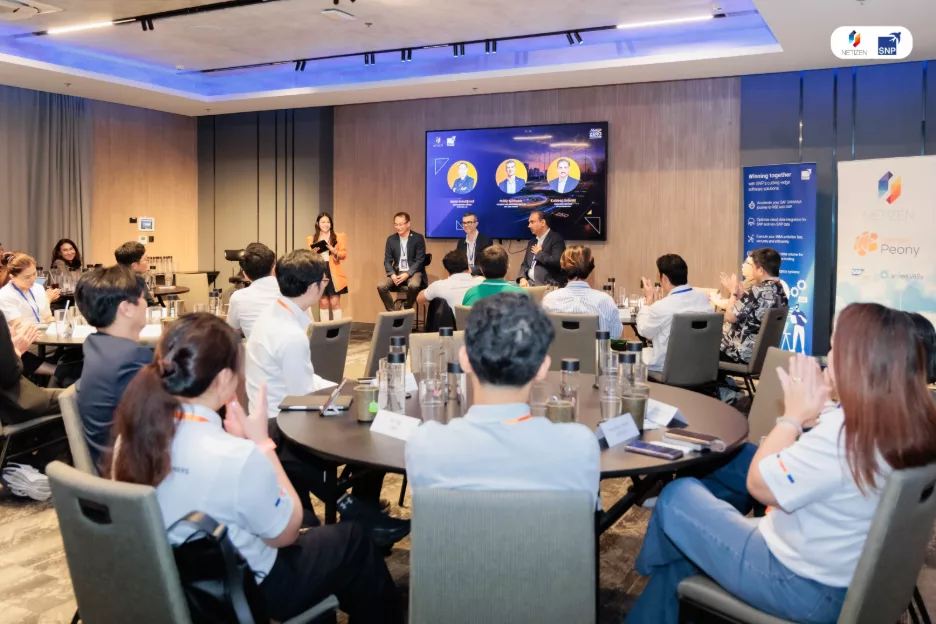
This event clearly marks the collaboration between the two companies, with Netizen acting as the consultant and guide for customers' Transformation journey in Thailand—from readiness assessment, roadmap design, and delivery to post-go-live support—while SNP, as a key partner, brings world-class Data Transformation technology where maximum precision is required.
“NETIZEN provides the guidance. SNP provides the technology. Together, we swing to zero downtime.”
The next step for organizations that haven't started yet
Throughout the day at the event, one question was asked most frequently during breaks, and it wasn't a technical one.
“How do we know which direction our organization should take?”
The answer is … you don't need to guess, and you don't need to make decisions before seeing your own data.
Because what happened at the event—whether it was an X-ray of the SAP system, separating active from inactive data, or calculating the exact TBs to be moved—none of this requires waiting for a signed contract to see.
Transformation Assessment : See the real picture before making a decision
Netizen offers interested organizations a Transformation Assessment, providing tangible answers across 4 areas
Where your organization stands on the spectrum
The answer you get isn't straight out of a textbook, but derived from a real analysis of your business systems—including your organizational structure, module usage, and custom codes that are still in use or haven't been touched in years.
The true TB figures
How large is your current system, and how much of that data actually needs to be migrated? This figure can impact your budget and project timeline more than you think.
Risks according to your organization's timeline
Counting back from 2030, factoring in project duration, budgeting periods, and internal approvals, Netizen can help calculate how many quarters your organization has left to make a decision.
Flexible roadmaps, not a forced path
Complete with the pros and cons of each approach, allowing you to make your own decision based on the most suitable options.
And this assessment begins with a conversation, not a proposal …
Because we aren't asking you to make any decisions on day one; we simply want to discuss where your organization currently stands and what you need to know before this decision reaches the board table.